Asked. Answered. Checked.
The app is not a copy of the manual, and its answers are not pasted out of it. Every question goes through three stages before you see a word.
Three stages, every time.
It reads.
The app reads the whole question and works out what you are trying to do. Once it’s done this, it translates it into the guide’s own words, not necessarily yours, and fetches the relevant sections of Avid’s reference guide from only the Sibelius version you picked.
It writes.
An AI model (Anthropic’s Claude) writes an answer using those sections as its source material. If you’re using Sibelius 2026.8 or 2026.9, facts that were checked in the Sibelius program itself when the app was built are also used (answers for every other version rest on that version’s guide alone).
It checks.
The answer is checked against the guide text before you see it. An answer that cannot be confirmed is withheld, and the app then tells you rather than showing you something it could not stand behind.
So each answer is composed for your question and checked before you see it.
Checked in Sibelius itself.
For Sibelius 2026.8 and 2026.9, answers rest on more than the guide. Facts were also read from the running program when the app was built, and where the two disagree, the program wins. Answers for every other version rest on that version’s guide alone.
Start with the goal.
Say what you want the music to do, not which button you think does it.

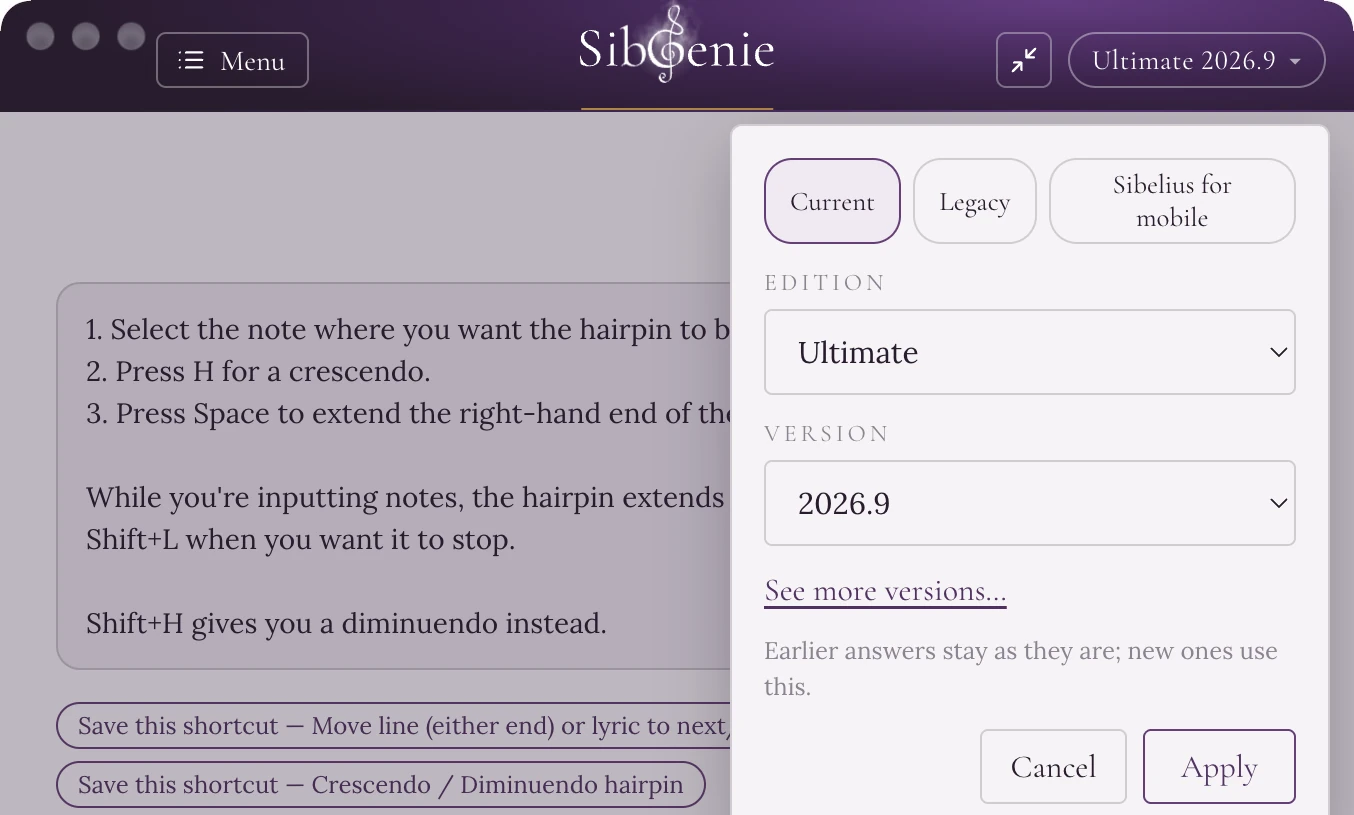
Your version.
Pick the Sibelius you use, and the answers are for that version.